“Biomass Platform”: Pineapple in Emerging Business Models Worldwide
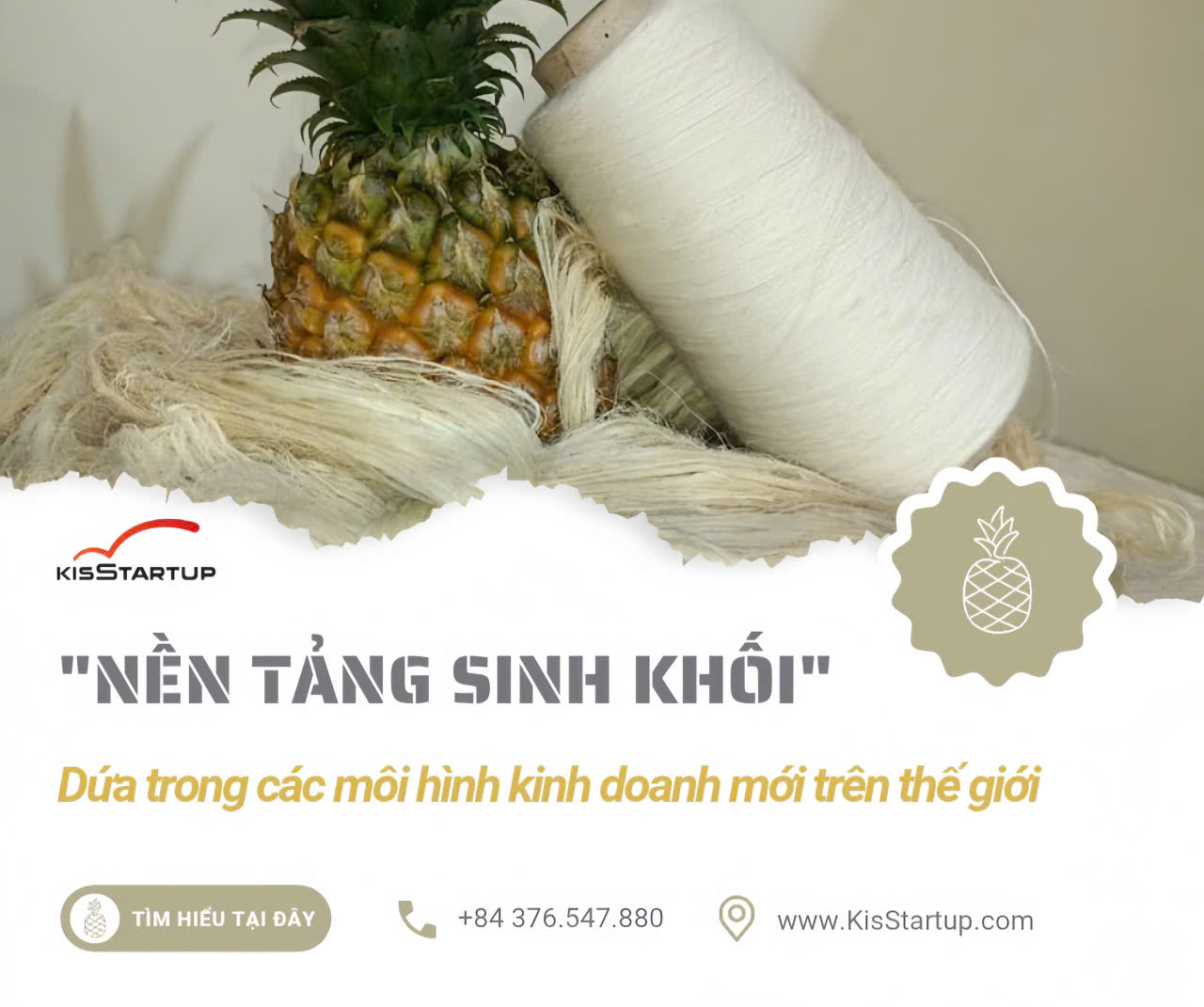
For decades, pineapples have been viewed primarily through the lens of agriculture and food processing. Economic value has focused on fresh fruit, juice, canned products, and dried goods, while the rest of the plant—leaves, peels, cores, and stems—has been treated as waste, often burned or buried. However, as the circular economy and bioeconomy emerge as new pillars of development, this perception is rapidly changing.
An increasing body of research and real-world models demonstrates that pineapple is not merely a fruit, but a biomass platform capable of supporting multiple parallel value chains, including food, materials, biotechnology, energy, and environmental services. When organized through an ecosystem-oriented approach, every part of the pineapple plant can become an input for a different business model, significantly increasing value per hectare of cultivation.
New Business Models Built Around Pineapple Biomass
Globally, a notable trend is the rise of enterprises that no longer operate in isolation at a single stage of the value chain, but instead design business models around biomass flows. In Costa Rica, eco:fibr collects entire pineapple plants after harvest—previously burned as waste—to produce eco-friendly pulp that partially replaces wood-based raw materials in the paper industry. The value of eco:fibr lies not only in pulp production, but in linking agriculture with forestry and sustainable packaging, contributing to forest protection and emissions reduction.
In Kenya, the Mananasi Fibre project demonstrates a different approach: transforming pineapple waste into multiple parallel revenue streams. Pineapple leaves are processed into fibers for the textile industry, residual biomass is converted into biochar and organic fertilizer, and waste collection activities generate carbon credits by avoiding open-field burning. This model exemplifies a “multi-product from a single biomass” approach, where profitability comes from the total system value rather than a single product.
Across Asia and Latin America, startups such as NextEvo and CeluNova focus on converting pineapple leaves into fibers, cellulose, or bio-based materials for fashion, packaging, and technical applications. These models do not compete with traditional agriculture, but instead unlock overlooked value streams to serve industries under pressure to replace fossil-based materials.
At the same time, large food corporations such as Great Giant Pineapple (Indonesia) pursue vertically integrated “zero-waste” strategies, reusing pineapple residues for animal feed, fertilizers, biogas, and packaging materials. These cases show that circular economy principles are not limited to startups, but are increasingly part of long-term competitive strategies for large enterprises.
Applied Bioeconomy and Modular Biorefinery Approaches
A key intersection across these models is the rise of small-scale biorefineries. Rather than investing in large plants from the outset, many successful initiatives begin with modular technologies that can operate independently and later be integrated. A bromelain extraction module from pineapple peels, cores, or stems can run at small scale; residual biomass can be used for feed or compost; wastewater can be treated via anaerobic digestion to produce biogas for on-site energy use.
This modular approach reduces upfront investment risks, enhances adaptability to market conditions, and is particularly suitable for tropical agriculture, where biomass supply is geographically dispersed and seasonally variable. When multiple modules are combined, the value generated per ton of pineapple biomass can far exceed that of traditional linear processing models.
Building Startup Ecosystems Around Pineapple
International experience shows that successful pineapple-based business models are rarely the result of isolated efforts. Instead, they are embedded in innovation ecosystems involving farmers, enterprises, universities, government agencies, and intermediary organizations. Farmers and cooperatives are not merely raw material suppliers, but partners in collection, pre-processing, and supply of valuable by-products. Enterprises integrate technology and market access; universities and research institutes provide R&D, process standardization, and workforce training; governments establish policy frameworks, standards, and infrastructure; and intermediaries connect capital, markets, and knowledge.
The critical factor lies in transforming waste into data-enabled resources. When pineapple leaves, peels, and cores are measured, classified, and traceable, they become reliable inputs for bio-based and material business models. Conversely, without lifecycle data, shared technical standards, and platforms connecting supply and demand, these by-products remain classified as waste despite their substantial economic potential.
From Pineapple Crops to Innovation Ecosystems
If pineapples are viewed solely as fruit, business opportunities remain limited to agriculture and food processing. However, if pineapples are recognized as a regenerative biological ecosystem, they become a space where agriculture meets biotechnology, materials intersect with fashion, and economic growth aligns with soil regeneration and emissions reduction. As global markets seek alternatives to fossil-based materials and low-emission value chains, pineapples—common in tropical regions—can serve as a foundation for new, flexible, and sustainable business models.
Ultimately, the determining factor is not technological capability alone, but ecosystem connectivity: connecting biomass with data, technology with markets, and economic value with environmental benefits. In this context, entrepreneurship based on pineapple biomass is not just about a product—it is about the emergence of a bioeconomy in action.
© Copyright belongs to KisStartup. Any form of copying, quoting, or reuse must clearly cite KisStartup as the source.
References (IEEE)
[1] S. R. Rojas et al., “Current status, challenges and valorization strategies for pineapple processing waste management,” International Journal of Sustainable Resources and Bioeconomy, 2025.
[2] FAO, Bioeconomy and Circular Economy in Agri-Food Systems, Rome, 2022.
[3] eco:fibr, “Pineapple plants as a sustainable raw material for pulp,” Root Camp Interview, 2023.
[4] SMEP Programme, Mananasi Fibre Pilot Case Study, July 2024.
[5] NextEvo, “Transforming pineapple waste into sustainable fashion,” 2024.
[6] CeluNova, Hult Prize Foundation Case Materials, 2023.
[7] Great Giant Foods, Sustainability Report 2023–2024, Indonesia, 2024.
[8] S. Mussatto et al., “Biorefinery concepts for agro-industrial residues,” Bioresource Technology, vol. 215, pp. 2–10, 2016.
[9] OECD, Innovation for a Sustainable Bioeconomy, Paris, 2020.
[10] Global Resilience Partnership, Keys to Building an Innovation Ecosystem in Food and Agriculture, 2021.
[11] Ellen MacArthur Foundation, Completing the Picture: How the Circular Economy Tackles Climate Change, 2019.