2025-12-09
How “Spice-Tech” Startups Are Reshaping the Global Spice Industry
Nguyễn Đặng Tuấn Minh
In the agricultural ecosystem, spices have long been viewed as a small, low-value market where differentiation is difficult. Yet in this seemingly old and overlooked sector, a new generation of startups is proving the opposite: with a reimagined business model and targeted investment in supply-chain technology, spices can absolutely become a large-scale, sustainable, and venture-backable industry.
Looking at Growcoms in India, Agricorp in Nigeria, and Trianon Spices in Tanzania, one common pattern emerges: they do not succeed because of spices; they succeed because they rethink the entire value chain—from farms, processing, and logistics to market access and data. Spices are merely the entry point; the redesigned value chain is the real product.
1. Growcoms – When a Marketplace Learns to Manage Complexity
Growcoms’ appeal lies not in spices but in their ability to build a system of management rather than a mere e-marketplace. The spice sector is highly fragmented: smallholder farmers, scattered factories, and B2B buyers demanding strict standards yet lacking trust in suppliers. Growcoms steps into this gap by orchestrating the chain—procurement, testing, blending, packaging, traceability, and even developing new seasonings for FMCG clients.
Understanding that “buy–sell” is never enough, Growcoms built capabilities in quality control, data, and risk management—the things buyers are actually willing to pay for. They don’t need another marketplace; they need a system that guarantees each shipment can be traced back to every field, every processing batch, every testing standard.
Their most defensible competitive advantage is exactly this: supply-chain data accumulated over years. A new team can build a factory, but it cannot replicate the historical traceability and quality records recognized by global FMCG buyers.
2. Agricorp – Treating Spice Export Like a Serious Industrial Sector
Nigeria grows vast amounts of ginger yet lacks a global brand. Agricorp recognized this gap and refused to follow the traditional trader model. They invested in raw-material zones, built factories, established traceability, and standardized processes to bring Nigerian spices into demanding international markets.
What’s notable is that Agricorp doesn’t chase flashy tech. They pursue useful technology: farm-management systems, stable processing protocols, shipment traceability, and efficient logistics. For them, tech is a tool to reduce risk, increase reliability, and secure long-term contracts directly with buyers—where the real profit lies.
This approach fits the spice industry perfectly, where global buyers are obsessed with risk: quality, residues, microbiology, moisture, contamination. Whoever solves these risks wins the market. Agricorp did exactly that—and was rewarded with tens of millions of dollars in Series A funding.
3. Trianon Spices – When “Impact” Becomes a Business Model
Trianon doesn’t talk much about technology, but they focus on what the market values most today: spices must carry stories of soil, farmers, and sustainability. They source from more than a thousand farmers, teach regenerative agriculture, reduce chemical use, restore soil health, and improve quality. Then they process and sell to the EU—where buyers are willing to pay premiums for organic, fair-trade, and regenerative products.
Trianon succeeds because they understand that in the premium segment, buyers purchase both the story and the real value. Their core capability is not just factories or farms; it’s their ability to integrate impact into the product—and translate that into legitimate, transparent, sustainable price premiums.
The surprising part is that this model is not just socially impactful—Trianon’s profit margins have increased steadily year after year. Sustainability here is not a slogan; it is a business capability.
What Actually Makes These Startups Successful?
Three layers of capabilities set these startups apart from traditional spice businesses:
First, they see spices as a data industry.
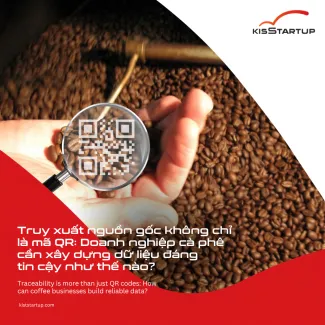
Each shipment isn’t just cinnamon, pepper, or ginger; it’s a dataset—farm origin, quality parameters, processing steps, active compounds, microbiology, moisture, compliance. When data is standardized, global buyers trust you, and you can scale. Without data, everything is risk.
Second, they control the bottlenecks others ignore.
In spices, the bottleneck is always standardization and traceability—the factors that worry buyers most. The startup that solves this owns a lasting advantage.
Third, they don’t confine themselves to being “an agricultural company.”
Growcoms sells quality-management services.
Agricorp sells supply-chain reliability.
Trianon sells sustainability and impact.
Spices are merely the medium; real value lies in supply-chain thinking, technology, and social impact.
A Direction for Vietnam
Vietnam has ginger, pepper, cinnamon, star anise, and chili—more than Nigeria or Tanzania. What we lack is not raw materials but business models capable of addressing global bottlenecks:
- quality standardization
- supply stability
- deep traceability
- transparency and sustainability
- value-added product design instead of raw-material export
By learning from these startups, Vietnam can absolutely build spice-tech models for Northern ginger, Yên Bái–Lào Cai cinnamon, Central Highlands pepper, or Quảng Ngãi chili. If we do, we won’t just export spices—we’ll export transparent supply chains, sustainable stories, and new standards for the Vietnamese spice industry.
That is the real value—and exactly what investors, global buyers, and future consumers are seeking.
© Copyright belongs to KisStartup. Any form of copying, citation, or reuse must clearly state KisStartup as the source.
- Log in to post comments
- 30 views