CircularEconomy

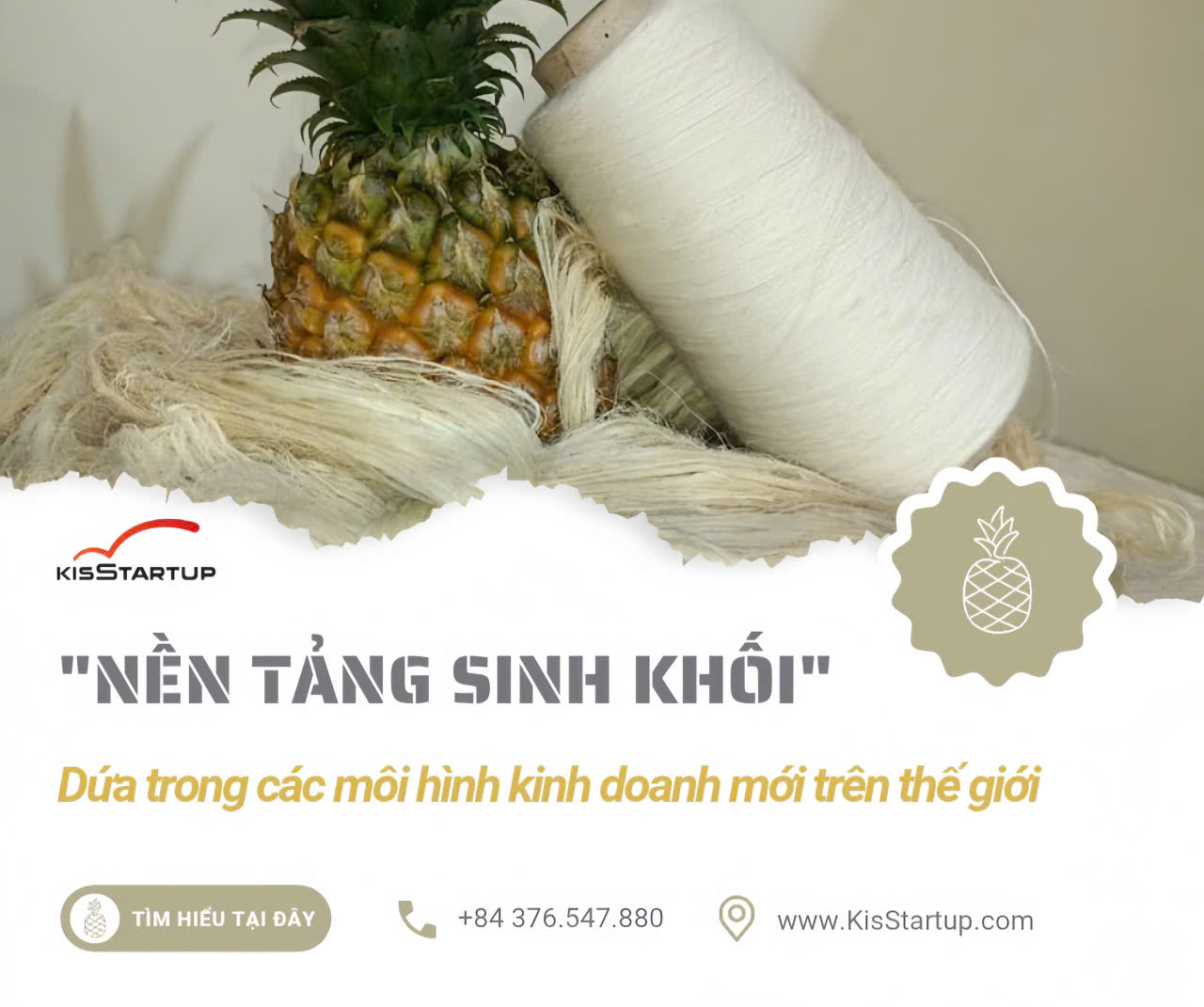
“Biomass Platform”: Pineapple in Emerging Business Models Worldwide

For decades, pineapples have been viewed primarily through the lens of agriculture and food processing. Economic value has focused on fresh fruit, juice, canned products, and dried goods, while the rest of the plant—leaves, peels, cores, and stems—has been treated as waste, often burned or buried. However, as the circular economy and bioeconomy emerge as new pillars of development, this perception is rapidly changing.

An increasing body of research and real-world models demonstrates that pineapple is not merely a fruit, but a biomass platform capable of supporting multiple parallel value chains, including food, materials, biotechnology, energy, and environmental services. When organized through an ecosystem-oriented approach, every part of the pineapple plant can become an input for a different business model, significantly increasing value per hectare of cultivation.

New Business Models Built Around Pineapple Biomass

Globally, a notable trend is the rise of enterprises that no longer operate in isolation at a single stage of the value chain, but instead design business models around biomass flows. In Costa Rica, eco:fibr collects entire pineapple plants after harvest—previously burned as waste—to produce eco-friendly pulp that partially replaces wood-based raw materials in the paper industry. The value of eco:fibr lies not only in pulp production, but in linking agriculture with forestry and sustainable packaging, contributing to forest protection and emissions reduction.

In Kenya, the Mananasi Fibre project demonstrates a different approach: transforming pineapple waste into multiple parallel revenue streams. Pineapple leaves are processed into fibers for the textile industry, residual biomass is converted into biochar and organic fertilizer, and waste collection activities generate carbon credits by avoiding open-field burning. This model exemplifies a “multi-product from a single biomass” approach, where profitability comes from the total system value rather than a single product.

Across Asia and Latin America, startups such as NextEvo and CeluNova focus on converting pineapple leaves into fibers, cellulose, or bio-based materials for fashion, packaging, and technical applications. These models do not compete with traditional agriculture, but instead unlock overlooked value streams to serve industries under pressure to replace fossil-based materials.

At the same time, large food corporations such as Great Giant Pineapple (Indonesia) pursue vertically integrated “zero-waste” strategies, reusing pineapple residues for animal feed, fertilizers, biogas, and packaging materials. These cases show that circular economy principles are not limited to startups, but are increasingly part of long-term competitive strategies for large enterprises.

Applied Bioeconomy and Modular Biorefinery Approaches

A key intersection across these models is the rise of small-scale biorefineries. Rather than investing in large plants from the outset, many successful initiatives begin with modular technologies that can operate independently and later be integrated. A bromelain extraction module from pineapple peels, cores, or stems can run at small scale; residual biomass can be used for feed or compost; wastewater can be treated via anaerobic digestion to produce biogas for on-site energy use.

This modular approach reduces upfront investment risks, enhances adaptability to market conditions, and is particularly suitable for tropical agriculture, where biomass supply is geographically dispersed and seasonally variable. When multiple modules are combined, the value generated per ton of pineapple biomass can far exceed that of traditional linear processing models.

Building Startup Ecosystems Around Pineapple

International experience shows that successful pineapple-based business models are rarely the result of isolated efforts. Instead, they are embedded in innovation ecosystems involving farmers, enterprises, universities, government agencies, and intermediary organizations. Farmers and cooperatives are not merely raw material suppliers, but partners in collection, pre-processing, and supply of valuable by-products. Enterprises integrate technology and market access; universities and research institutes provide R&D, process standardization, and workforce training; governments establish policy frameworks, standards, and infrastructure; and intermediaries connect capital, markets, and knowledge.

The critical factor lies in transforming waste into data-enabled resources. When pineapple leaves, peels, and cores are measured, classified, and traceable, they become reliable inputs for bio-based and material business models. Conversely, without lifecycle data, shared technical standards, and platforms connecting supply and demand, these by-products remain classified as waste despite their substantial economic potential.

From Pineapple Crops to Innovation Ecosystems

If pineapples are viewed solely as fruit, business opportunities remain limited to agriculture and food processing. However, if pineapples are recognized as a regenerative biological ecosystem, they become a space where agriculture meets biotechnology, materials intersect with fashion, and economic growth aligns with soil regeneration and emissions reduction. As global markets seek alternatives to fossil-based materials and low-emission value chains, pineapples—common in tropical regions—can serve as a foundation for new, flexible, and sustainable business models.

Ultimately, the determining factor is not technological capability alone, but ecosystem connectivity: connecting biomass with data, technology with markets, and economic value with environmental benefits. In this context, entrepreneurship based on pineapple biomass is not just about a product—it is about the emergence of a bioeconomy in action.

© Copyright belongs to KisStartup. Any form of copying, quoting, or reuse must clearly cite KisStartup as the source.

References (IEEE)
[1] S. R. Rojas et al., “Current status, challenges and valorization strategies for pineapple processing waste management,” International Journal of Sustainable Resources and Bioeconomy, 2025.
 [2] FAO, Bioeconomy and Circular Economy in Agri-Food Systems, Rome, 2022.
 [3] eco:fibr, “Pineapple plants as a sustainable raw material for pulp,” Root Camp Interview, 2023.
 [4] SMEP Programme, Mananasi Fibre Pilot Case Study, July 2024.
 [5] NextEvo, “Transforming pineapple waste into sustainable fashion,” 2024.
 [6] CeluNova, Hult Prize Foundation Case Materials, 2023.
 [7] Great Giant Foods, Sustainability Report 2023–2024, Indonesia, 2024.
 [8] S. Mussatto et al., “Biorefinery concepts for agro-industrial residues,” Bioresource Technology, vol. 215, pp. 2–10, 2016.
 [9] OECD, Innovation for a Sustainable Bioeconomy, Paris, 2020.
 [10] Global Resilience Partnership, Keys to Building an Innovation Ecosystem in Food and Agriculture, 2021.
 [11] Ellen MacArthur Foundation, Completing the Picture: How the Circular Economy Tackles Climate Change, 2019.

Author: 
KisStartup

German Technologies Being Imported into Vietnam: From Precision Machinery to Green Transition

Over the past decade, Germany has consistently ranked among Vietnam’s most important technology partners. Beyond being one of Europe’s largest trading partners, Germany is widely regarded as a “gold standard” for industrial technology, precision engineering, and sustainable development solutions. German technologies imported into Vietnam may not be flashy or trend-driven, but they steadily shape the country’s manufacturing capabilities, management practices, and green transformation across multiple economic sectors.

From KisStartup’s perspective, the key value lies not in the volume of imported equipment, but in the technological logic that comes with German solutions: high standards, long lifecycle, resource optimization, and a strong connection between technology and human capacity building.

Mechanical Engineering and Manufacturing: The Backbone of Vietnam’s Industry

One of the earliest and most deeply embedded German technology groups in Vietnam is mechanical engineering and manufacturing. German CNC machines, metal processing equipment, molds, and precision measurement systems are widely used in automotive, motorcycle, electronics, tooling, and supporting industries.

Their strength lies not only in precision, but also in long-term operational stability—well suited for Vietnamese factories transitioning from basic processing to higher value-added, technically sophisticated manufacturing. Many Vietnamese enterprises report that while initial investment costs are higher, the total cost of ownership over the equipment’s lifecycle is significantly lower compared to cheaper alternatives.

Automation and Industry 4.0: Importing Mindsets, Not Just Hardware

Alongside machinery, Vietnam is increasingly importing German automation and factory digitalization solutions: control systems, industrial sensors, production monitoring software, energy management systems, and predictive maintenance tools.

Notably, German technology integrates hardware and software seamlessly, embedding an Industry 4.0 philosophy where data serves real production decisions rather than mere reporting. This approach is particularly relevant for Vietnamese manufacturers facing skilled labor shortages and growing pressure to improve productivity.

Renewable Energy and Energy Efficiency Technologies

Germany is a global pioneer in energy transition, and its technologies have been increasingly imported into Vietnam over the past 5–7 years. These include wind turbines, solar power equipment, energy storage systems, and solutions for optimizing electricity consumption in factories and buildings.

For Vietnam, the greatest value lies not only in the equipment itself, but in system integration—how renewable energy is embedded into existing infrastructure to reduce long-term costs and meet increasingly stringent emission requirements from EU markets.

Environmental Technologies: Water, Emissions, and Circular Economy

Another fast-growing category of German technology imports involves environmental solutions for water treatment, air pollution control, and industrial waste management. These include wastewater treatment systems, water reuse technologies, dust filtration, toxic gas treatment, and waste heat recovery, applied across industrial parks, food processing, chemicals, textiles, and energy sectors.

From a sustainability perspective, German technologies help Vietnam move closer to a circular economy model—where waste is not merely treated, but recovered and transformed into new value such as energy, reusable water, or secondary raw materials.

Agricultural and Food Technologies: Standardization and Safety

In agriculture and food processing, Vietnam imports numerous German processing lines, cold storage systems, quality control technologies, and food safety solutions. These are critical for Vietnamese enterprises seeking access to European markets.

The strength of German technology lies in process standardization—from harvesting and preprocessing to deep processing, packaging, and traceability—enabling Vietnamese agricultural products not only to “enter” international markets, but to remain competitive over the long term.

Vocational Training and Skills Transfer: A “Soft Technology” with Hard Impact

One of the most influential “soft technologies” Vietnam is importing from Germany is the dual vocational training model. Through cooperation projects, Vietnamese enterprises and vocational schools adopt training approaches closely linked to real production environments, strict labor discipline, and high technical standards.

From a long-term perspective, this is a decisive factor ensuring that imported technologies do not remain “black boxes,” but are gradually localized and mastered through human capital.

Implications for Vietnamese Enterprises and Local Governments

Overall, German technologies imported into Vietnam focus on three core pillars: enhancing production capacity, improving resource efficiency, and meeting sustainable development requirements. However, significant challenges remain in absorption capacity—investment capital, skilled labor, and management capabilities.

From KisStartup’s viewpoint, Vietnamese enterprises should approach German technology not merely as a procurement decision, but as a long-term partnership: learning how to operate, standardizing processes, and gradually building internal capabilities. For local governments, policies to attract German technology should be accompanied by training support, enterprise–university linkages, and pilot programs for green transformation.

As Vietnam enters a phase of competition driven by quality and sustainability, German technology represents not just a technical option, but a strategic pathway for upgrading the economy—slowly, but solidly.

German technology companies and organizations seeking to expand into Southeast Asia should view Vietnam as a strategic pilot market, where green transition and manufacturing upgrades are accelerating, and where DHomes acts as a trusted partner to reduce market entry risks.

Local governments, industrial zones, incubators, and innovation support organizations can collaborate with DHomes to design pilot technology programs that combine technology transfer, workforce training, and local value chain development.

If you are interested in German–Vietnam technology cooperation, connect with DHomes today to experiment together, learn together, and build long-term partnerships.

© Copyright KisStartup. Any reproduction, quotation, or reuse must clearly cite KisStartup as the source.

Author: 
KisStartup

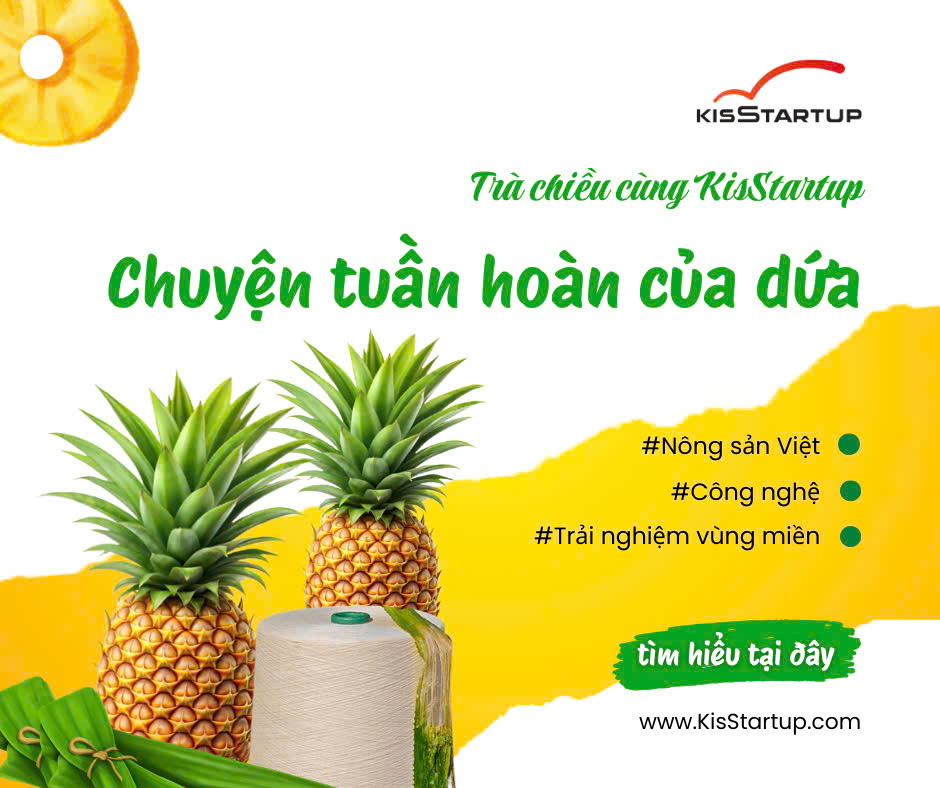
Afternoon Tea with KisStartup: The Circular Journey of Pineapple

The pineapple plant, much like rice in the history of Vietnamese agriculture, is a paradoxical entity: so familiar that we think we fully understand it, yet constantly confronted with new questions shaped by each era. In the past, the key challenges of pineapple were yield and fresh-fruit markets. Today, the question has expanded: how can every part of the plant—from fruit, peel, core, stem to leaves—be integrated into a value-creating cycle that reduces emissions and regenerates the soil? Globally, answers are gradually taking shape through increasingly diverse processing and biotechnological solutions, forming a clear picture of a circular economy built around pineapple [1].

From upgraded traditional processing to high-value biotechnology

Pineapple processing technologies today span a broad spectrum. At one end are “upgraded traditional” technologies familiar to Vietnam’s agro-processing sector, such as juice, canned pineapple, and dried products. At the other end lie biotechnology, materials, and energy applications—where pineapple is no longer just a fruit, but a feedstock for enzymes, biopolymers, fuels, and novel materials [1].

In fruit processing—the primary product—industrial juice, nectar, and beverage lines have been standardized. A typical process includes grading, washing, peeling, coring, pressing, filtration, Brix and acidity standardization, followed by rapid pasteurization at around 80 °C before bottling or canning. Precise control of temperature and time is critical to preserving pineapple’s natural flavor and color [2]. At a higher level, spray-drying technology converts pineapple juice into instant powder, extending shelf life, reducing logistics costs, and enabling applications in functional foods and instant beverages [3].

For canned and dried pineapple, technological improvements now focus more on quality than volume. Modern canning lines employ vacuum sealing, precise seaming, and pasteurization at 90–95 °C under tightly controlled conditions to ensure food safety while maintaining fruit texture [4]. In drying, combining methods such as low-temperature drying or pulsed electric field (PEF) pretreatment has been shown to shorten drying time, reduce nutrient loss, and better preserve natural color compared to conventional hot-air drying [5].

When by-products become the center of innovation

The real breakthrough of pineapple-based circular economy lies in reimagining by-products not as “waste,” but as the core of technological innovation. Pineapple peel, core, stem, and crown are rich sources of bromelain—an enzyme with high value in food, biomedical, and cosmetic applications. Modern extraction processes prioritize “green” methods, using mechanical grinding with water or buffer solutions, followed by purification via ultrafiltration membranes, dialysis, and concentration. Final products are often freeze-dried to preserve enzyme activity without organic solvents [6]. Some studies report bromelain recovery yields of up to 96.5%, with enzyme activity suitable for food and pharmaceutical applications [7].

Beyond enzymes, pectin, polyphenols, and antioxidants from pineapple peel are increasingly extracted using advanced techniques. Microwave-assisted pectin extraction significantly shortens processing time, improves yield, and enhances molecular structure compared to conventional heating. Other green extraction methods—such as ultrasound, deep eutectic solvents, or supercritical CO₂—enable high-purity recovery of aromatic and bioactive compounds for premium cosmetics and functional foods [8], [9].

Pineapple as a feedstock for bioenergy and biochemicals

At a systems level, many studies and pilot models approach pineapple through a biorefinery lens. Pineapple residues rich in sugars and cellulose can be pretreated, hydrolyzed, and co-fermented to produce bioethanol, integrated with enzyme extraction streams within the same facility. Beyond ethanol, fermentation processes can yield lactic acid, citric acid, xylitol, or liquid biofertilizers—maximizing value extraction from a single biomass stream [10], [11].

Residual biomass after extraction and fermentation can be further processed via anaerobic digestion to produce biogas, or pyrolyzed to create biochar. Biochar derived from pineapple residues, when applied to soil or compost, has been shown to enhance nutrient retention, improve soil structure, and contribute to carbon emission reduction in agriculture [11], [12].

Leaf fiber and materials: where agriculture meets fashion

One of the most visible symbols of pineapple-based circular economy is pineapple leaf fiber (PALF). After harvest, pineapple leaves are processed using decortication machines, then washed, degummed, and transformed into fibers or nonwoven fabrics. PALF has high mechanical strength, making it suitable for textiles and polymer-reinforced composites [1].

Building on this foundation, pineapple-leaf “leather” materials such as Piñatex have brought agricultural by-products into global fashion value chains. The process involves producing nonwoven fabrics from pineapple fibers, then coating them with water-based or bio-based polymers to create leather-like surfaces used in shoes, bags, and accessories. What stands out is not only the material itself, but the way this model connects farmers, material producers, and consumer brands into a low-emission value chain [13].

Implications for Vietnamese startups: technology cannot stand alone

From KisStartup’s perspective, the challenge is not whether Vietnam has access to these technologies, but how to connect them into viable business models. A single startup or cooperative cannot realistically produce enzymes, materials, and energy simultaneously—but it can play a strategic role within one link of a circular ecosystem. The key lies in designing material flows and cash flows so that the by-product of one process becomes the input of another.

In the context of green transition and increasingly stringent emission-reduction requirements, pineapple may follow a path similar to rice: from food security, to export value, and ultimately to a “green” narrative—measurable emissions, verifiable life-cycle impacts, and tangible contributions to soil regeneration. Technology is essential, but it only realizes its full potential when embedded in circular economic thinking, where nature, people, and markets are connected within a sustainable ecosystem.

© Copyright belongs to KisStartup. Any reproduction, citation, or reuse must clearly credit KisStartup.

References (IEEE)
[1] S. R. et al., “Current status, challenges and valorization strategies of pineapple processing waste management,” Sustainable Resources Review, 2023.
 [2] Rwanda Agriculture Board, “Pineapple juice processing,” 2020.
 [3] P. K. et al., “Spray drying of pineapple juice,” Chiang Mai Journal of Science, 2019.
 [4] DOST-ITDI, “Pineapple processing technology,” 2018.
 [5] OptiCept, “Harnessing pulsed electric field technology in pineapple drying,” 2022.
 [6] A. et al., “Green extraction of bromelain from pineapple waste,” Food Chemistry, 2024.
 [7] C. et al., “Membrane purification of bromelain,” Chemical Engineering Transactions, 2023.
 [8] M. et al., “Microwave-assisted extraction of pectin from pineapple peel,” Carpathian Journal of Chemistry, 2017.
 [9] L. et al., “Green extraction technologies for bioactive compounds,” Journal of Cleaner Production, 2025.
 [10] J. et al., “Integrated biorefinery for pineapple waste,” Journal of Cleaner Production, 2017.
 [11] IJSRBP, “Valorization of pineapple waste into bioenergy and biofertilizer,” 2025.
 [12] Frontiers in Agronomy, “Biochar from agricultural residues,” 2024.
 [13] Design Life-Cycle, “Piñatex: pineapple leaf fiber leather,” 2020.

Author: 
KisStartup