AgriTech

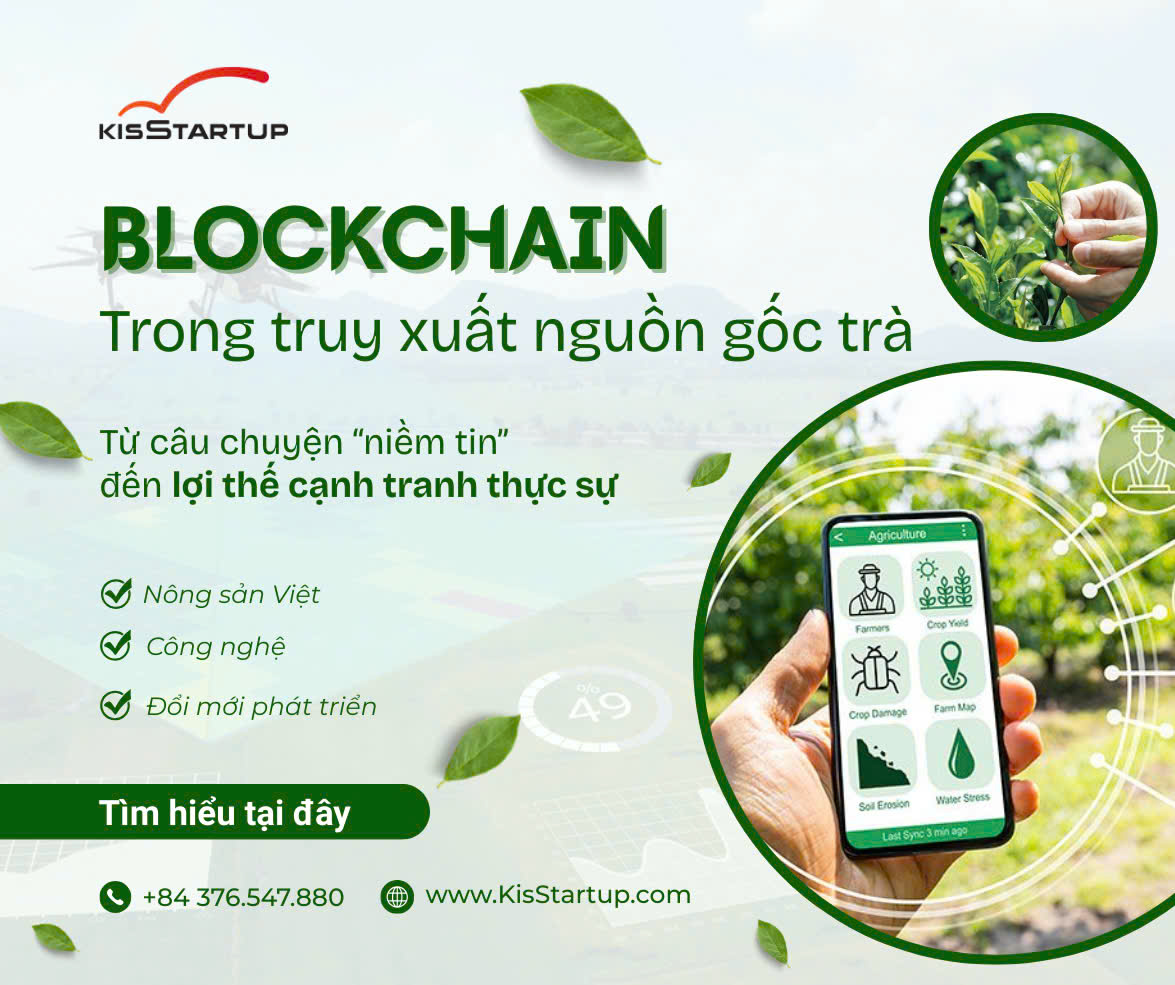
Blockchain in Tea Traceability: From “Trust” to a Real Competitive Advantage
For many years, the global tea industry has operated on something inherently fragile: trust. Trust that tea truly comes from the origin stated on the packaging, that it is cultivated according to organic or sustainable standards, and that it has not been adulterated along supply chains stretching thousands of kilometers. As the tea market moves toward premiumization and the “quantification of sustainability,” trust based solely on narratives is no longer sufficient. This is where blockchain emerges as a new infrastructure for the tea industry.

Why does tea need blockchain – even if it is less visible than other crops?

In Vietnam, blockchain-based traceability has been adopted relatively early for export-oriented agricultural products such as dragon fruit, mangoes, coconuts, and seafood. Tea, however, presents a different challenge. Its supply chain is more complex, processing times are longer, and the value of each batch depends heavily on processes and storytelling rather than volume alone. This has led many tea enterprises to question whether blockchain implementation is cost-effective at their current scale.

International experience suggests that the answer lies not in the technology itself, but in system design. Blockchain does not need to be “all-encompassing” from the start. For tea, it only needs to address three core bottlenecks: origin verification, preservation of process data, and clear linkage between that data and the market.

What does blockchain actually do in the tea supply chain?

At its core, blockchain is an immutable ledger where key events in the lifecycle of a tea batch are recorded: cultivation area, harvest date, farming methods, processing batches, testing results, logistics, and distribution. Once recorded, no single party can unilaterally alter the data.

Globally, studies on organic tea supply chains in India show that blockchain significantly improves transparency and reduces fraud in organic claims and origin declarations. These models often use permissioned blockchains combined with off-chain data storage, recording only data “fingerprints” (hashes) on-chain to reduce costs and improve efficiency.

In East Africa, blockchain-based traceability platforms have been used to link tea batches to smallholder farmers, sustainable farming practices, and labor conditions. Multinational corporations such as Unilever have piloted blockchain in tea supply chains to combat counterfeiting, reduce adulteration, and enhance transparency in sustainability programs.

Where should Vietnamese tea enterprises begin?

A common misconception is viewing blockchain as a large-scale IT project. In reality, successful implementations often start small. A cooperative or tea enterprise can begin with a single flagship product—such as specialty green tea or organic tea—and a relatively standardized growing area.

Each tea batch is assigned a unique identifier from harvest. Farmers or cooperative staff input minimal but critical data: tea variety, plot code, fertilization dates, and harvest time. Processing facilities add information on withering, firing, drying, moisture levels, and residue testing. Upon packaging, a QR code is printed, allowing consumers to access the full “digital profile” of the tea batch.

The key is not collecting excessive data, but collecting the right data—what the market truly cares about. Consumers may not read technical tables, but they do value clear origins, farming practices, certifications, and authentic stories. Blockchain ensures that these stories are backed by verifiable digital evidence.

Beyond exports: blockchain as an internal management tool

An often-overlooked benefit is internal governance. When data on cultivation areas, processing batches, and quality outcomes are systematically recorded, enterprises can compare performance across regions, seasons, and processing methods. This forms the foundation for upgrading tea quality toward specialty and premium segments rather than competing solely on volume.

In Australia, the tea tree oil industry has used blockchain to protect the “100% pure” label, prevent adulteration, and preserve regional brand value. Similar logic can be applied to Vietnamese teas such as ancient Shan Tuyet tea, premium Oolong, and certified organic lines.

Practical considerations for Vietnam

Blockchain cannot replace production discipline. If harvesting, processing, and quality control are inconsistent, blockchain will merely record that inconsistency. Therefore, traceability must go hand in hand with technical standardization.

Cost is another key factor. Enterprises do not need to build systems from scratch; many traceability platforms already integrate blockchain, enabling rapid deployment at reasonable costs for cooperatives and SMEs. Most importantly, people matter. Farmers, cooperative staff, and factory workers must understand why data is entered and how it creates value.

A strategic perspective for tea enterprises

If blockchain is treated merely as a “more advanced QR code,” projects will quickly stall. But if it is seen as a verified storytelling infrastructure, tea enterprises can enter a different competitive arena—where value lies not only in tea leaves, but in the entire journey from plantation to teacup.

As markets increasingly demand transparency, sustainability, and clear origins, blockchain is no longer a luxury trend. It is steadily becoming a necessary condition for Vietnamese tea to advance on the global specialty tea map.

© Copyright belongs to KisStartup. Any form of copying, quoting, or reuse must cite KisStartup as the source.
 

Author: 
KisStartup

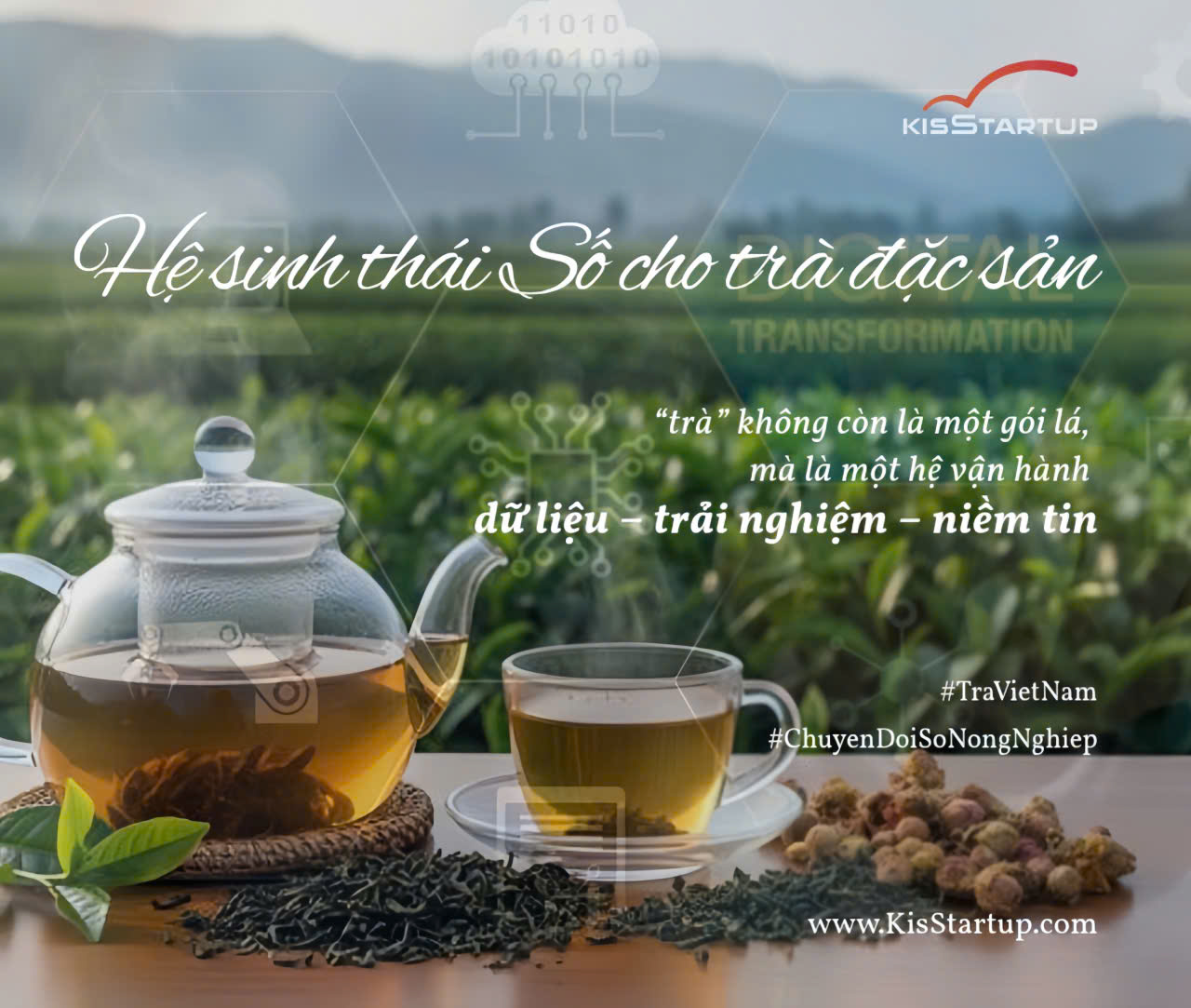
Digital Ecosystems for Specialty Tea: Tea Is No Longer Just Leaves in a Bag, but a System of Data – Experience – Trust

When diving deep into the global specialty tea market, one shift becomes unmistakably clear: value no longer lies primarily in the volume of tea sold, but in the ability to define quality, tell authentic origin stories, create meaningful experiences, and—most importantly—turn trust into repeat transactions.
Digital ecosystems exist to do exactly that: transforming what is traditionally “invisible” in tea—growing regions, craftsmanship, seasonality, consistency, and supply-chain ethics—into structured, verifiable, and monetizable information.

In this ecosystem, successful business models do not emerge because “tea is trendy,” but because they solve a classic problem of specialty agriculture: information asymmetry. End consumers and B2B buyers are willing to pay a premium—but only when they trust what they are buying. Digital platforms, data, and experience design are the fastest way to build that trust at scale.

1) D2C Subscription: Buying Tea Through Relationships, Not One-Off Trials

Specialty tea subscription boxes are essentially a form of “trust financialization.” Revenue comes from recurring subscriptions, but the core asset is behavioral and preference data: aroma profiles customers enjoy, seasonal demand patterns, price sensitivity, and churn drivers. The real strength of this model is not beautiful packaging, but the feedback loop of curation → experience → data → personalization → repeat purchase.

The biggest challenge is rarely the product itself, but customer acquisition cost (CAC) and content freshness. When boxes feel repetitive, users leave. Strong brands therefore integrate content into the product—brewing guides, regional stories, online workshops, pairing suggestions, and limited editions. When content becomes the reason customers anticipate each delivery, subscriptions gain longevity.

Long-term success requires a strong product engine to reduce CAC over time—typically through community building, referrals, or hybrid online–offline experiences. Without this, subscriptions easily turn into an advertising arms race.

2) Digital Marketplace / Direct Trade: “Auctioning Trust” and Optimizing Liquidity

In specialty tea, marketplaces are not just listing platforms. They standardize a shared language between buyers and sellers: lot profiles, terroir descriptions, processing standards, sensory scores, certifications, transaction history, and logistics conditions. Once this language is standardized, liquidity—something the fragmented tea market lacks—can emerge.

Revenue often comes from transaction commissions, listing fees, B2B memberships, plus “trust infrastructure” services such as third-party verification, lot insurance, and contract-based trade financing. The key insight: the more standardized and reliable the data, the lower the risk for buyers—and the easier it is to attract large buyers. When major buyers enter, quality sellers follow, creating network effects.

The hardest challenge is the classic chicken-and-egg problem. Many platforms fail because they build “classified boards,” not “quality assurance and transaction systems.”

3) B2B Traceability & Data Platforms: SaaS-ifying Standards Through Compliance

If subscriptions sell to drinkers, traceability and data platforms sell to the supply chain: processors, brands, distributors, and origin regions. As global markets increasingly demand transparency, traceability, and sustainability reporting, these platforms become mandatory infrastructure. Revenue typically comes from SaaS licensing (by lot, tonnage, or users), system integration fees, and advanced analytics packages.

For specialty tea, traceability is not just a QR code linking to a webpage. It creates value when it supports decisions: which lots are stable, which regions fluctuate, which producers maintain quality across seasons, residue risks, and how storage conditions affect flavor. When traceability becomes an operational tool, platforms gain long-term B2B retention.

Notably, supply-chain tech startups must prove they do more than “record data”—they must make data trustworthy. Many combine IoT, QR systems, and algorithmic validation layers to reduce fraud and false reporting.

4) “Tea + Digital Experience”: When Brands Become Cultural Clubs

A fast-growing segment blends specialty tea with experience: tea bars, workshops, origin tours, tasting kits, and memberships. What’s new is the digitization of these experiences—booking systems, loyalty points, educational content, communities, livestreams, and cross-border sales. Done right, tea becomes an entry ticket into a lifestyle, not just a beverage.

This model suits specialty tea particularly well, as tea is inherently ritualistic. Technology does not replace culture—it helps culture scale and travel across borders.

5) Capital Flows into Tea Startups: Money Follows Brand, Channel, and Scalability—Not Tea Leaves

Globally, major investments cluster into three groups:
(i) D2C brands with cross-border reach. VAHDAM exemplifies the “from origin to global consumer” story, raising a USD 24 million Series D led by IIFL AMC (Inc42 Media).
(ii) Convenient or new-format tea (RTD, drops, etc.). Tea Drops raised USD 5 million Series A to scale e-commerce and retail distribution (FoodDive).
(iii) Modernized tea beverage chains with strong operations and digitalization. Chagee’s US IPO raised approximately USD 411 million, valuing the company at over USD 6 billion—a signal that capital still rewards “tea + chain + brand + operational efficiency” (Financial Times).

KisStartup’s key message: investors do not “love tea” emotionally. They love scalability. Capital follows models with clear customer bases and repeat purchases, strong channels, or superior operational efficiency.

6) Large Tea Startup Fundraising: Read the Growth Narrative, Not Just the Numbers

Each funding case is effectively an essay on growth drivers:

  • VAHDAM convinced investors through a global D2C narrative and brand-controlled value chain (Series D: USD 24M).
  • Tea Drops leveraged convenience and scalable formats (Series A: USD 5M).
  • Chagee demonstrated how “tea + modern experience + chain + capital markets” can command massive valuations.

For Vietnamese specialty tea, KisStartup advises studying these cases not to copy them, but to understand what mechanisms the market rewards: brand power, product format, or system-level operations.

© Copyright KisStartup. Any reproduction, quotation, or reuse must clearly credit KisStartup.

Author: 
Nguyễn Đặng Tuấn Minh

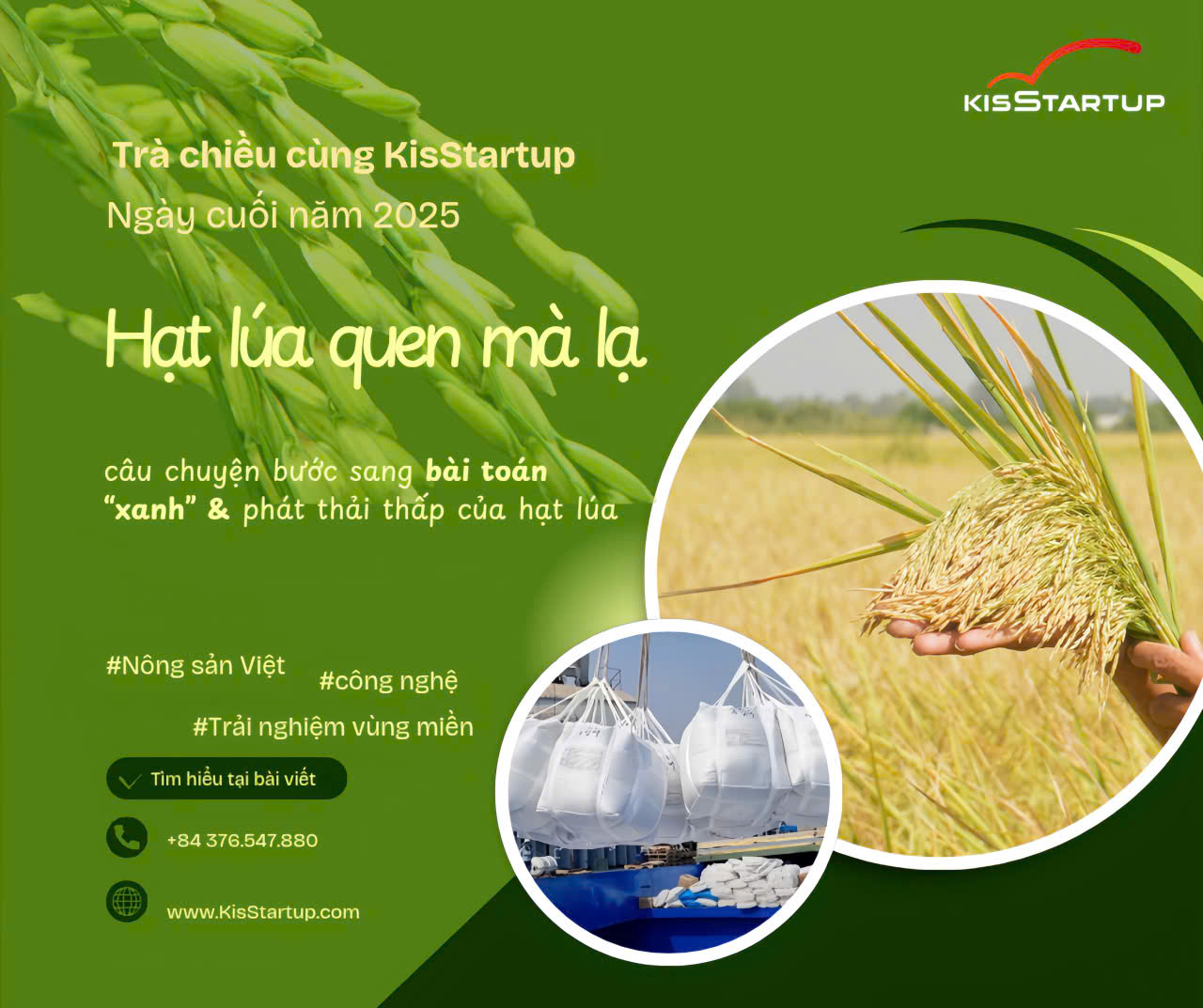
Afternoon Tea with KisStartup – The Last Days of 2025


The Rice Grain: Familiar Yet Unfamiliar as Vietnam’s Development Enters the “Green” and Low-Emission Era

At the end of the year, when life slows down, KisStartup often reflects on things that feel deeply familiar. Rice is one of them. So familiar that we think we already understand it—yet also unfamiliar, because every year the rice grain is placed into a new equation.

In the past, rice was about harvests—producing enough to feed the nation in the years after war. Later, it was about price, as Vietnam stabilized production and opened to global markets. Then came standards, as Vietnamese rice entered demanding export markets. Today, rice faces a new challenge: it must be green. Green in ways that can be measured—emissions quantified, processes traced, methane reduced, and in the near future, potentially linked to carbon finance.

Looking back, rice has accompanied Vietnam through a long journey. From a food-deficit country, Vietnam became one of the world’s leading rice exporters, contributing to global food security. This achievement reflects hard work, technological improvement, and timely policy choices. Yet that same journey has created new challenges: soil degradation, increasing freshwater scarcity, and greenhouse gas emissions from rice cultivation becoming a significant part of agricultural emissions [1], [2].

Seeing Rice Through a Different Lens

For decades, the rice value chain followed a simple logic: inputs – yield – output – export, with value measured mainly in tons. But as climate change becomes a global concern and markets begin asking about the carbon footprint of products, rice is no longer just a commodity. It carries an additional layer of value: how it is produced.

Low-emission rice is therefore not just a technical concept—it represents a shift in development thinking. The question moves from “How do we produce more?” to “How do we produce smarter, with lower emissions, while still securing farmers’ livelihoods?”

In Vietnam, technologies for low-emission rice already exist. On the “inside of the seed,” research institutes are applying advanced breeding and biotechnology to develop rice varieties that emit less methane and are more resilient to drought, salinity, and climate extremes [3], [4]. On the “outside of the field,” practices such as sparse seeding, balanced fertilization, organic and bio-fertilizers, and especially alternate wetting and drying (AWD) irrigation have proven effective in reducing emissions, saving water and input costs, while maintaining or even improving yields [5], [6].

Alongside these are digital efforts: water-level sensors, farm management apps, electronic field logs, and digital extension tools. These technologies help turn farming experience into measurable and verifiable processes [1], [7].

The Gap Is Not Technology, but the Market

The biggest challenge today is not a lack of technical solutions, but the absence of clear market mechanisms that can convert low emissions into real economic value. Without reliable measurement, reporting, and verification (MRV) systems at field and production-area levels, “low-emission” remains difficult to turn into a tradable attribute [8]. When data are fragmented—stored in notebooks, paper reports, or human memory—the value chain cannot convincingly prove to international buyers that the rice is truly green.

More importantly, when benefit-sharing mechanisms from carbon reductions are unclear, farmers and cooperatives have little incentive to change long-established farming practices [2], [9]. As a result, many technologies remain stuck at pilot stages instead of becoming widespread practices.

An Opportunity to Redesign the Rice Value Chain

Yet the end of 2025 also brings promising signals. Large-scale programs on high-quality, low-emission rice are being implemented; green credit is increasingly linked to rice value chains; and rice straw is being reconsidered as a resource rather than waste to be burned [5], [10], [11].

From KisStartup’s perspective, this is the right moment to view rice not just as an agricultural product, but as the center of a new value ecosystem. In this ecosystem, value comes not only from rice itself, but from farming data, reduced emissions, restored soils, and new financial flows such as green finance and carbon markets.

New business models are emerging: companies building low-emission rice brands backed by data and traceability; service providers offering MRV solutions for cooperatives; digital platforms connecting farmers, enterprises, banks, and certifiers; and circular economy models that turn rice straw into organic fertilizer or biomass materials—creating revenue while cutting emissions [8], [10], [11].

Returning to the Land—With Technology

At a deeper level, the story of low-emission rice is also about how Vietnamese society reconsiders its relationship with land. Not just extraction, but care. Not just taking, but giving back. Healthy soil sustains healthy crops; clean water sustains resilient rice; and rural ecosystems then have a future for the next generation.

Diligence and creativity have taken Vietnam far with rice. But in today’s context, diligence alone is not enough. It must be complemented by breakthrough technologies, new business models, and a market mindset capable of turning environmental value into sustainable economic value.

The rice grain thus remains familiar—present in every daily meal—yet increasingly unfamiliar. Within each panicle now lie stories of data, carbon, technology, and a greener development future.

As 2025 comes to a close, KisStartup believes that if done right, Vietnamese rice will travel far not only because it is fragrant and delicious, but because it can prove it was grown with respect—for the land, the water, and the climate. And that may be one of the most meaningful legacies today’s generation can leave for the next.

© Copyright belongs to KisStartup. Any reproduction, citation, or reuse must clearly acknowledge KisStartup as the source.

References

[1] Vietnam Agricultural Extension, “Breakthrough Technologies for the One Million Hectares of High-Quality, Low-Emission Rice Program,” 2025.

[2] Ministry of Agriculture and Environment, “Reducing Methane Emissions in Rice Cultivation in Vietnam,” 2024–2025.

[3] HATRI, “Applying Advanced Technologies in Breeding Low-Methane-Emission Rice Varieties,” 2024.

[4] MARD, “New Rice Varieties with Reduced Methane Emissions for Climate Change Adaptation,” 2025.

[5] Government Newspaper, “Technology Paving the Way for High-Quality, Low-Emission Rice Production in the Mekong Delta,” 2025.

[6] Vietnam Clean Energy, “Scaling Up Low-Emission Rice Farming Models,” 2025.

[7] Nature & Environment Magazine, “Applying Digital Technologies in Rice Farming Management,” 2024.

[8] VJOL, “Measurement, Reporting and Verification (MRV) of Emissions in Agriculture,” 2024–2025.

[9] State Audit Newspaper, “High-Quality Rice Production Linked to Environmental Protection,” 2025.

[10] VOV, “Unlocking the Value of Rice Straw in the Journey toward Low-Emission Rice Cultivation,” 2025.

[11] Agribank, “Green Credit for Low-Emission Rice Development,” 2025.

Author: 
KisStartup

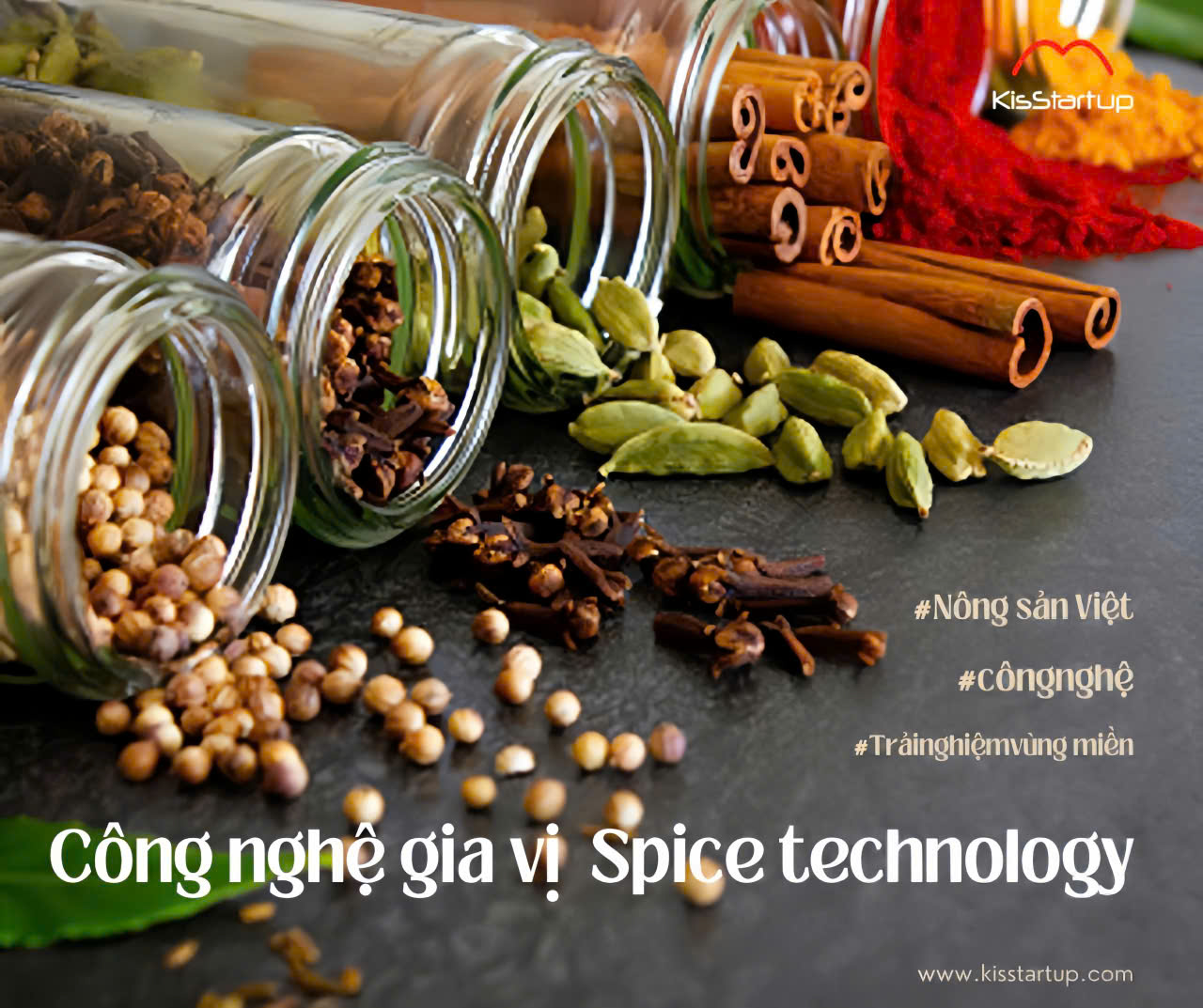
How “Spice-Tech” Startups Are Reshaping the Global Spice Industry


Nguyễn Đặng Tuấn Minh

In the agricultural ecosystem, spices have long been viewed as a small, low-value market where differentiation is difficult. Yet in this seemingly old and overlooked sector, a new generation of startups is proving the opposite: with a reimagined business model and targeted investment in supply-chain technology, spices can absolutely become a large-scale, sustainable, and venture-backable industry.

Looking at Growcoms in India, Agricorp in Nigeria, and Trianon Spices in Tanzania, one common pattern emerges: they do not succeed because of spices; they succeed because they rethink the entire value chain—from farms, processing, and logistics to market access and data. Spices are merely the entry point; the redesigned value chain is the real product.

1. Growcoms – When a Marketplace Learns to Manage Complexity

Growcoms’ appeal lies not in spices but in their ability to build a system of management rather than a mere e-marketplace. The spice sector is highly fragmented: smallholder farmers, scattered factories, and B2B buyers demanding strict standards yet lacking trust in suppliers. Growcoms steps into this gap by orchestrating the chain—procurement, testing, blending, packaging, traceability, and even developing new seasonings for FMCG clients.

Understanding that “buy–sell” is never enough, Growcoms built capabilities in quality control, data, and risk management—the things buyers are actually willing to pay for. They don’t need another marketplace; they need a system that guarantees each shipment can be traced back to every field, every processing batch, every testing standard.

Their most defensible competitive advantage is exactly this: supply-chain data accumulated over years. A new team can build a factory, but it cannot replicate the historical traceability and quality records recognized by global FMCG buyers.

2. Agricorp – Treating Spice Export Like a Serious Industrial Sector

Nigeria grows vast amounts of ginger yet lacks a global brand. Agricorp recognized this gap and refused to follow the traditional trader model. They invested in raw-material zones, built factories, established traceability, and standardized processes to bring Nigerian spices into demanding international markets.

What’s notable is that Agricorp doesn’t chase flashy tech. They pursue useful technology: farm-management systems, stable processing protocols, shipment traceability, and efficient logistics. For them, tech is a tool to reduce risk, increase reliability, and secure long-term contracts directly with buyers—where the real profit lies.

This approach fits the spice industry perfectly, where global buyers are obsessed with risk: quality, residues, microbiology, moisture, contamination. Whoever solves these risks wins the market. Agricorp did exactly that—and was rewarded with tens of millions of dollars in Series A funding.

3. Trianon Spices – When “Impact” Becomes a Business Model

Trianon doesn’t talk much about technology, but they focus on what the market values most today: spices must carry stories of soil, farmers, and sustainability. They source from more than a thousand farmers, teach regenerative agriculture, reduce chemical use, restore soil health, and improve quality. Then they process and sell to the EU—where buyers are willing to pay premiums for organic, fair-trade, and regenerative products.

Trianon succeeds because they understand that in the premium segment, buyers purchase both the story and the real value. Their core capability is not just factories or farms; it’s their ability to integrate impact into the product—and translate that into legitimate, transparent, sustainable price premiums.

The surprising part is that this model is not just socially impactful—Trianon’s profit margins have increased steadily year after year. Sustainability here is not a slogan; it is a business capability.

What Actually Makes These Startups Successful?

Three layers of capabilities set these startups apart from traditional spice businesses:

First, they see spices as a data industry.
Each shipment isn’t just cinnamon, pepper, or ginger; it’s a dataset—farm origin, quality parameters, processing steps, active compounds, microbiology, moisture, compliance. When data is standardized, global buyers trust you, and you can scale. Without data, everything is risk.

Second, they control the bottlenecks others ignore.
In spices, the bottleneck is always standardization and traceability—the factors that worry buyers most. The startup that solves this owns a lasting advantage.

Third, they don’t confine themselves to being “an agricultural company.”

Growcoms sells quality-management services.

Agricorp sells supply-chain reliability.

Trianon sells sustainability and impact.
Spices are merely the medium; real value lies in supply-chain thinking, technology, and social impact.

A Direction for Vietnam

Vietnam has ginger, pepper, cinnamon, star anise, and chili—more than Nigeria or Tanzania. What we lack is not raw materials but business models capable of addressing global bottlenecks:

  • quality standardization
  • supply stability
  • deep traceability
  • transparency and sustainability
  • value-added product design instead of raw-material export

By learning from these startups, Vietnam can absolutely build spice-tech models for Northern ginger, Yên Bái–Lào Cai cinnamon, Central Highlands pepper, or Quảng Ngãi chili. If we do, we won’t just export spices—we’ll export transparent supply chains, sustainable stories, and new standards for the Vietnamese spice industry.

That is the real value—and exactly what investors, global buyers, and future consumers are seeking.

© Copyright belongs to KisStartup. Any form of copying, citation, or reuse must clearly state KisStartup as the source.
 

Author: 
Nguyễn Đặng Tuấn Minh