By Ngô Hà
On October 27, during the International Digital Week in Ninh Binh, Vietnam officially released its first-ever Readiness Assessment Report on the Implementation of UNESCO’s Recommendation on the Ethics of Artificial Intelligence.
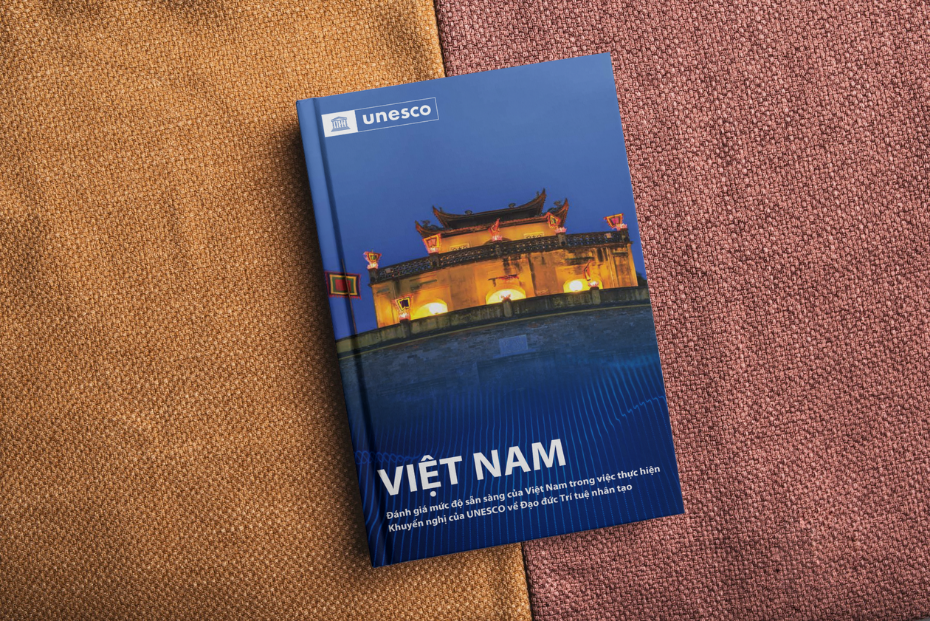
The Readiness Assessment Report on Vietnam’s Implementation of UNESCO’s Recommendation on the Ethics of Artificial Intelligence (RAM) marks an important milestone.
Photo: KHPT
In 2021, the United Nations Educational, Scientific and Cultural Organization (UNESCO) adopted a Global Recommendation on the Ethics of Artificial Intelligence, approved by 194 Member States, including Vietnam. This is the world’s first global framework setting out ethical standards for AI — a technology reshaping every aspect of human life.
To assess how ready countries are to implement this recommendation, UNESCO developed a Readiness Assessment Methodology (RAM) — a toolkit consisting of 181 quantitative and qualitative questions designed to collect information across multiple dimensions of the AI ecosystem: legal and institutional; social and cultural; economic; scientific and educational; and technological and digital infrastructure.
“Seventy countries have participated in the RAM assessment, and Vietnam is among the first in Asia to complete its report — demonstrating strong leadership in building a responsible AI ecosystem from the outset,” said Mr. Jonathan Wallace Baker, UNESCO Representative to Vietnam, at the report launch on October 27 during International Digital Week in Ninh Binh.
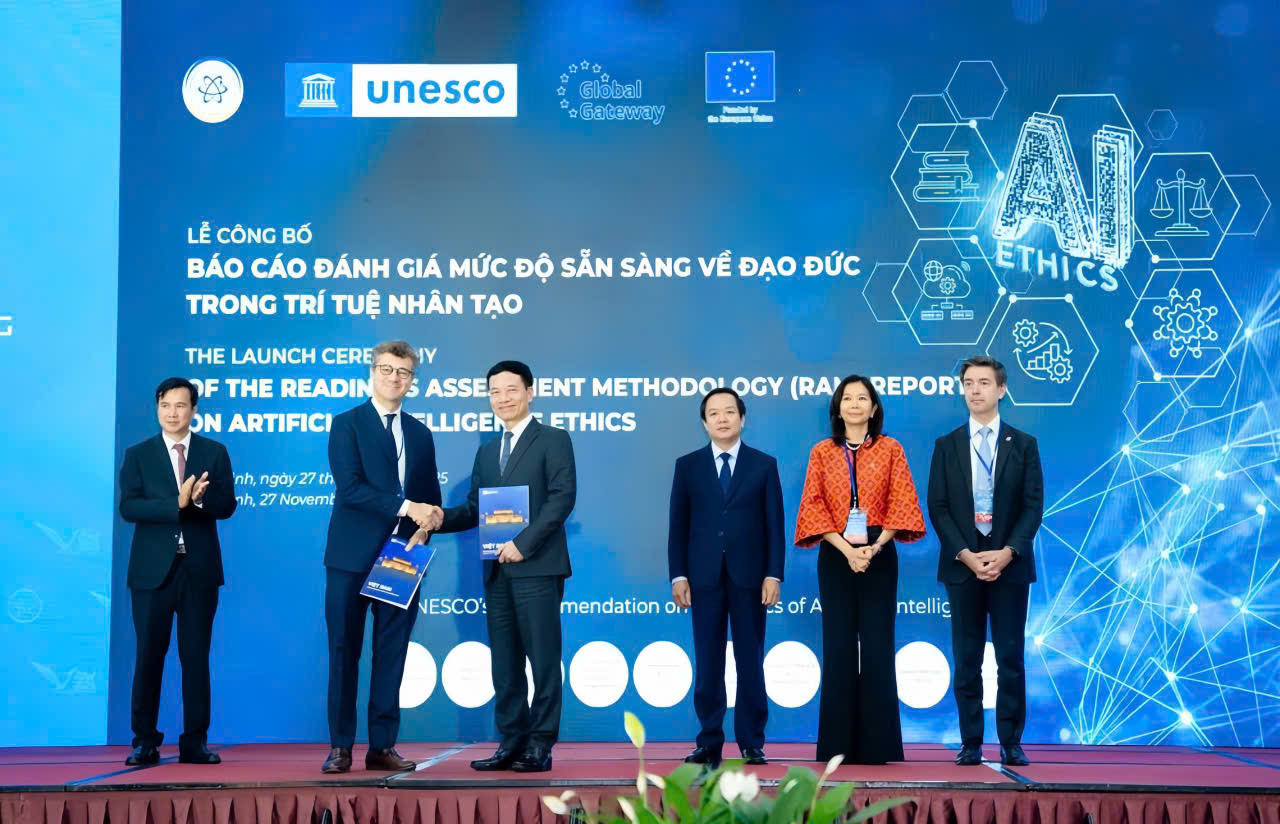
The handover ceremony of the RAM Report to the Ministry of Science and Technology.
Photo: Organizing Committee
The RAM Report highlights Vietnam as a dynamic and decisive nation in AI development. Evidence of this includes the country’s issuance of several resolutions and a National Strategy on AI, promotion of data sharing across government agencies, and remarkable progress in AI research — rising from 134th to 26th place globally in AI scientific publications within just over a decade.
According to the report, Vietnam is also laying a strong foundation for digital transformation. In 2024, for the first time, Vietnam was ranked “Very High” in the United Nations E-Government Development Index, thanks to widespread internet and mobile network infrastructure that helps bridge the digital divide between rural and urban areas. Vietnam also stands out in math and science competencies in the region, and enjoys a high level of public trust in digital technologies and government data — key factors for developing responsible AI.
However, the report also identifies gaps to be addressed: unequal access to STEM education, especially for women, persons with disabilities, and ethnic minorities; limited data interoperability among sectors; and insufficient integration of environmental, cultural, and linguistic preservation factors in the national AI strategy.
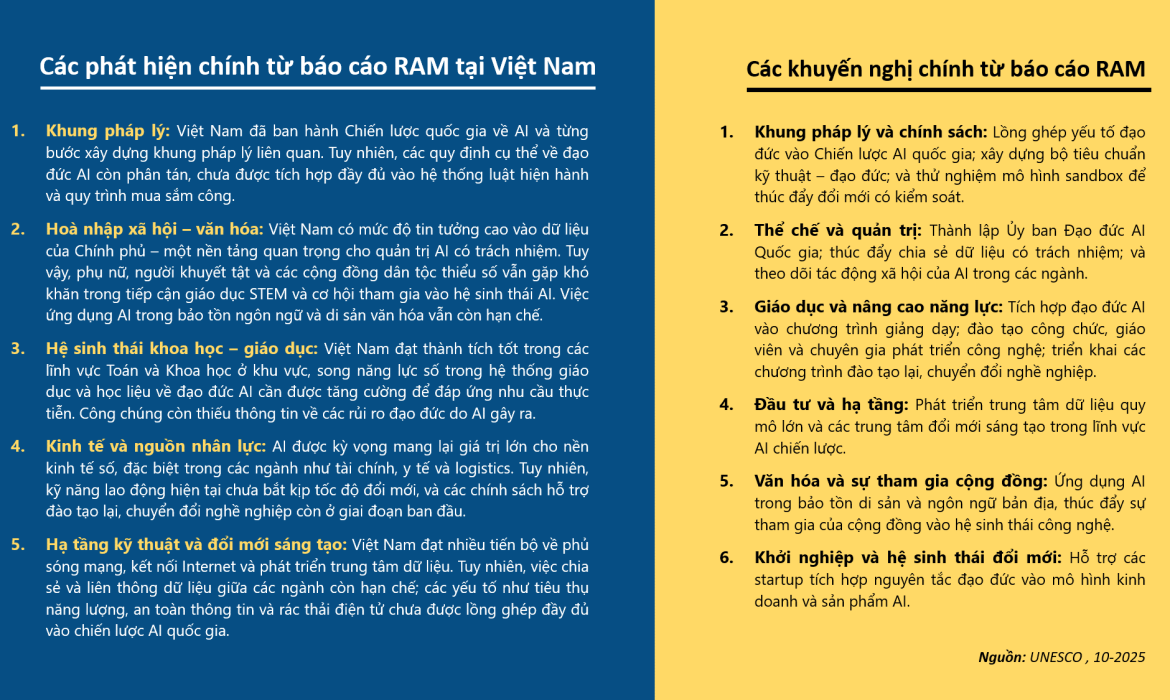
Key findings and recommendations of Vietnam’s RAM Report. Source: UNESCO | Graphic: KHPT
The report recommends that Vietnam:
- Develop ethical and technical AI standards, and pilot flexible policy tools such as regulatory sandboxes to guide responsible innovation;
- Establish a National AI Ethics Committee;
- Introduce AI ethics training for civil servants, educators, and technology developers.
Additionally, the report suggests investing in large-scale data centers, building innovation hubs for strategic AI sectors, promoting community-driven AI applications for cultural and heritage preservation, and fostering responsible innovation through AI startups.
The RAM assessment in Vietnam was conducted by a multidisciplinary team of experts from leading domestic universities between August 2024 and August 2025, coordinated by the Ministry of Science and Technology, with technical support from UNESCO and funding from the European Union.
Published in KH&PT, Issue No. 1368 (44/2025)
Source: Tia Sáng
Full report: Vietnam’s Readiness Assessment Report on the Ethics of AI (UNESCO, 2025)
https://articles.unesco.org/sites/default/files/medias/fichiers/2025/10/...
Source: UNESCO