2026-06-18
Book: The Customer-Funded Business
Instead of focusing on venture capitalists, choose a “Customer-funded Business”.
The rate of startups receiving investment is already modest, and the survival rate of those successful startups after receiving funding is even smaller. For decades, planning businesses, seeking investors from the very first days of a startup, or expecting that relying on investors would change fortunes has led many startups astray from their original goal: doing business to serve their ultimate masters, the customers. It is no exaggeration to say that customers are the true masters, as they are the ones who open their wallets to sustain your company every day.
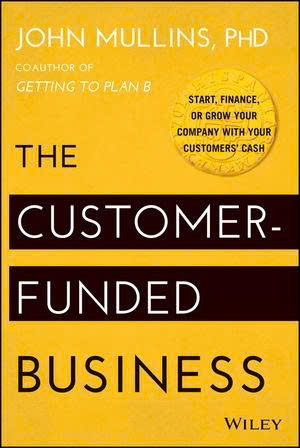
Completely overturning the viewpoints that dominated for a long time regarding investors, investment funds, business planning, and fundraising, John Mullins pointed out in his book,"The Customer-Funded Business: Start, Finance, or Grow Your Company with Your Customers’ Cash", that raising capital and approaching investment funds early is a mistake. The proof is that businesses that grow and develop well have never raised venture capital. The immense risk of early fundraising even exceeds the capacity and calculation of startups.
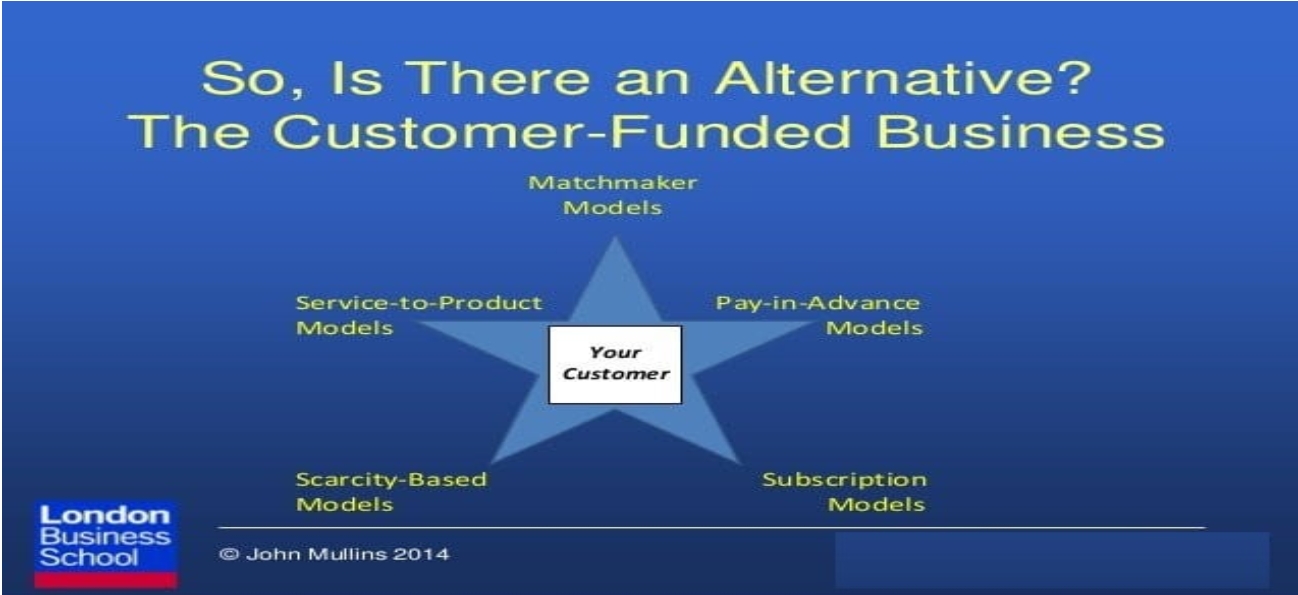
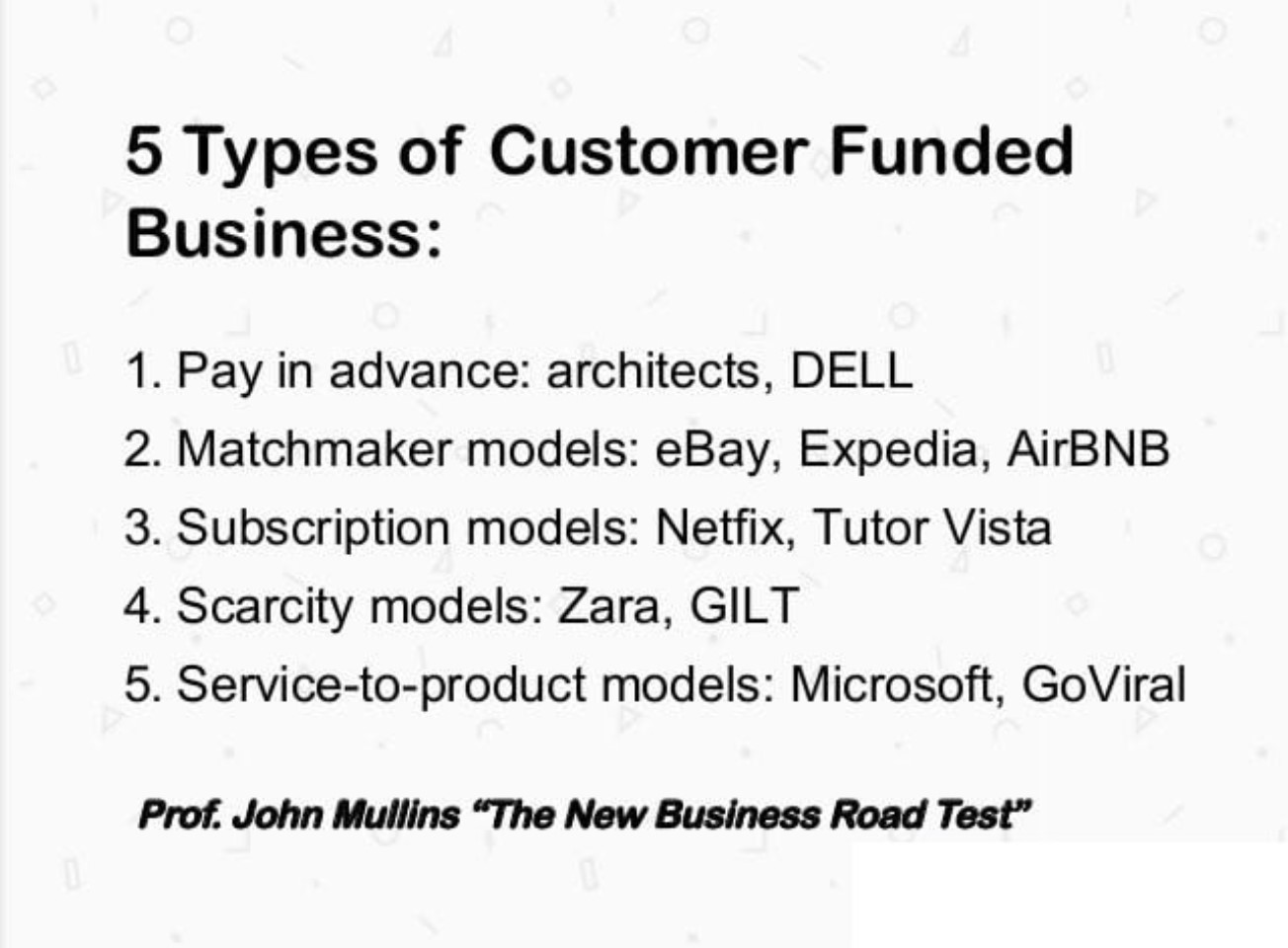
Therefore, Mullins points out that, instead of focusing on venture capitalists, entrepreneurs should choose a “Customer-funded Business” by analyzing practical case studies through five common groups of business models, illustrated by some of the world's most innovative enterprises, including:
1. The "Matchmaker" or Platform-Building Model
In this model, the business acts as an intermediary connecting supply and demand. An example of this model is Airbnb, a platform connecting travelers with individuals who want to rent out their sofas, spare rooms, or vacation villas. Airbnb started with the three founders subletting three extra air mattresses in their apartment for $80/night and became famous after President Obama delivered a speech in Denver, which drew 80,000 attendees but faced a severe shortage of accommodations. Today, more than half of the hosts on Airbnb are individuals (rather than commercial hotel services).
2. The Pay-in-Advance Model
That is, the seller convinces the buyer to pay in full or in part before the product reaches their hands. An example of this model is Threadless, an American e-commerce and artist community website. Initially, they organized a design competition on the dreamless.org website and selected the five best designs to print on T-shirts for sale. Since bulk printing was very expensive, they only spent $500 to print 12 T-shirts for each design and sold them for $12 each to the dreamless community. They sold out quickly, and the proceeds, over $1,400, were enough to cover the costs to continue their business. Threadless's model relies on a community of artists and loyal art lovers to create products and fund production.
3. The Service-to-Product Model
Instead of just providing products, companies following this model offer a blend of both services and products. The British company Goviral is an example; they do not just create marketing content but also connect with publishers and advertisers to optimize brand development for customers. Goviral started as a team providing services to create viral videos on the internet in 2003, and it was not until 2011 that they formally founded the company. Currently, they build niche websites for specific target audiences so that media companies and brands can place advertisements there, ensuring they target the exact customers who need them. Until it was sold for $97 million, this company had never needed to raise investment capital.
4. The Scarcity-Based Model
Vente-Privee is the e-commerce company that introduced the first flash-sale concept in France. They organize online discount sales events for fashion, technology, toys, and wine brands that last only three to five days, helping companies quickly clear out end-of-season and excess inventory. They collect customer money upfront within just a few days but are allowed to pay the brands long after the products are sold, meaning they do not need to borrow capital to maintain their operations.
5. The Subscription-Based Model
Users of the companies' products pay for a product package on a periodic basis. TutorVista is an example, where parents are more than willing to spend $100 per month for their children to receive online tutoring in all natural science subjects. This Indian company teaches high school students by communicating via internet phone, messaging, fax, and electronic whiteboards.
Mullins points out that the success stories of these business models share a common trait: they did not raise capital too early. They only sought investment when their business models had already been validated by customer acceptance and proven by their practical, effective business performance. Does this mean angel investors or venture funds are a bad choice for enterprises? The answer is that it depends entirely on the timing. Clearly, you must carefully weigh the timing of the decision to bring someone into your business, or simply observe the over 90% rejection rate of startup projects by funds and angel investors. You will find the answer for yourself.
Reading up to this point, you might wonder, what do angel investors and venture capitalists say when they read this book? In fact, this is a book that has received high praise from investors and fund managers alike. Quite simply, they need businesses that understand what they are doing, who they are serving, and that will continue on their chosen path whether they receive investment or not. Entrusting money to such individuals is undoubtedly far safer and much more effective.
Introduction by: Nguyen Dang Tuan Minh, Manager & Co-founder of KisStartup
- Log in to post comments
- 26 views