2026-06-26
From Farm to Cup to Farm to Story: The Future of Vietnamese Coffee
The Future of Vietnamese Coffee – When the Coffee Bean Transcends Agriculture to Become a Story of Culture, Data, and Innovation
Vietnam stands firmly among the world’s largest coffee exporters. This is a proud achievement built over decades by millions of farmers, processing enterprises, and a commercial system that has brought Vietnamese coffee beans to more than 80 countries and territories.
However, in a rapidly changing world, a critical question is becoming increasingly important: Can we continue to compete merely by selling more coffee, or has the time come to rethink how we extract more value from every single coffee bean?
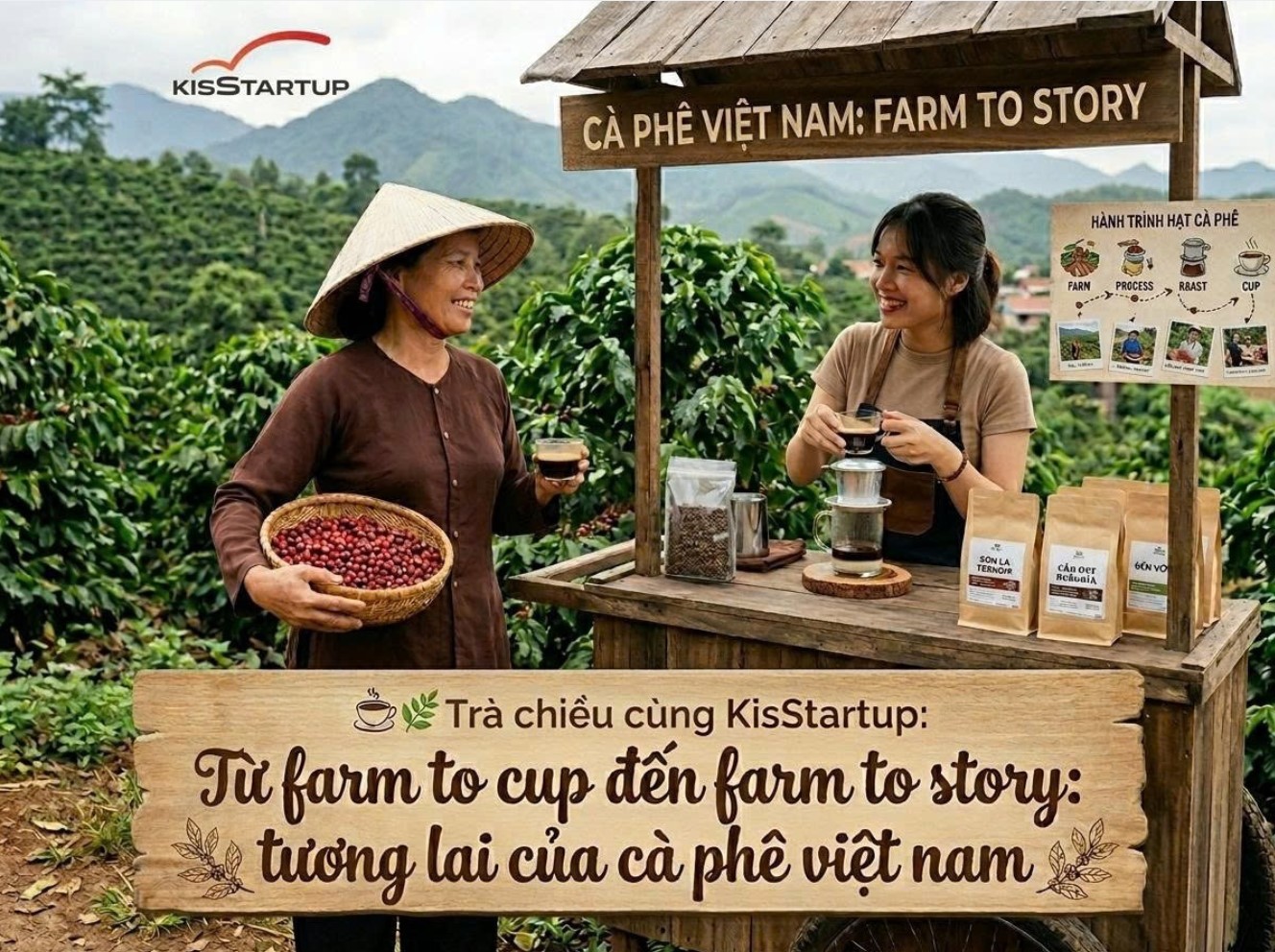
The World is No Longer Buying a Cup of Coffee; They are Buying an Experience
For years, the global coffee industry has witnessed a profound transformation. While coffee was once treated primarily as a raw commodity, a growing segment of modern consumers is now seeking values that extend far beyond mere flavor profiles.
The rapid rise of the specialty coffee movement demonstrates that customers deeply care about quality scores, plant varieties, altitude, terroir, processing methods, the farmers' stories, and the entire "farm-to-cup" journey.
Alongside this, green and responsible consumption trends are reshaping the market. Factors like sustainability certifications, carbon emission reductions, fair labor practices, supply chain transparency, and eco-friendly packaging are no longer just added bonuses-they are increasingly becoming non-negotiable criteria for many customer segments, particularly in developed economies.
Today, a single cup of coffee can be an intersection of multiple layers of value:
- The sensory quality of the bean itself;
- The story of the land and its community;
- The culture of appreciation;
- Product design and customer experience;
- Traceability data;
- Environmental and social commitments.
In other words, the true value of coffee no longer resides solely within the bean.
The Great Void in Vietnamese Coffee: We Command Volume, But Still Seek Iconic Brands
This is perhaps one of the greatest paradoxes of the Vietnamese coffee industry.
While we are one of the world's leading coffee exporters, our presence on the international specialty coffee map remains modest. The number of Vietnamese brands recognized by global consumers as icons of quality, culture, and distinctiveness is still very limited.
While Ethiopia is deeply anchored to the story of being the cradle of coffee, and Colombia has successfully built its national image around the narratives of its growing regions and farmers, many of Vietnam's exceptional coffee regions—such as Dak Lak, Cau Dat, Son La, or Khe Sanh—are still on a journey to find a narrative compelling enough to step onto the global stage.
This is not due to a lack of capability among Vietnamese enterprises. In fact, many businesses have made remarkable efforts in deep processing, brand building, and developing specialty coffee.
However, a common challenge that KisStartup observes when working with agricultural enterprises is the tendency to solve problems in isolation:
- When the market demands certifications, we chase certifications;
- When customers demand better packaging, we alter the packaging;
- When sales decline, we look for additional sales channels.
While these actions are necessary, relying purely on short-term fixes makes it incredibly difficult for an enterprise to secure a distinctive positioning in the next 5 to 10 years.
A Strong Coffee Brand Must Be Designed as an Ecosystem
In the philosophy of innovation, a successful product is rarely just a good product on its own. It is typically the result of a holistically designed system.
A future-ready coffee brand needs to answer larger, systemic questions:
Which land do we represent?
Whether it is Son La Arabica grown at altitudes above 1,000 meters, Central Highlands Robusta driven by novel processing techniques, or a cultural narrative woven into local communities.
Which customer segment do we serve?
A specialty buyer in Japan will hold vastly different expectations compared to a young consumer seeking a creative coffee experience in a bustling metropolitan city.
What data validates our story?
In the future, claims like "clean coffee," "ethnic minority-grown coffee," or "traditional coffee" will lose their persuasive edge if they lack accompanying data regarding the growing region, production processes, and socio-environmental impacts.
Are we selling coffee, or are we selling an experience?
Coffee can seamlessly connect with tourism, art, design, gastronomy, lifestyle spaces, experiential workshops, or communities unified by a specific way of living.
Digital Transformation and AI: An Opportunity for Small Enterprises to Play the Big Game
A defining advantage of our current era is that the distance between a small enterprise at the source of raw materials and a global customer base is shrinking.
Today, a smallholder farmer or a boutique enterprise is fully capable of:
- Building digital profiles for products and growing regions;
- Telling their unique story through images, videos, and online platforms;
- Leveraging AI for market research, consumer trend analysis, and multilingual content creation;
- Connecting directly with customer communities across various nations.
Technology does not replace product quality, but it ensures that good stories gain the visibility they deserve.
From the Coffee Bean to a Long-Term Vision
Perhaps the greatest bottleneck for the Vietnamese coffee industry in the coming phase is not technology, capital, or market access. It is the capacity to build a long-term vision.
A globally valuable coffee brand is not forged in a single harvest season or through a one-off marketing campaign. It demands years of persistent dedication to cultivating source regions, standardizing quality, accumulating data, earning customer trust, and continuously innovating.
At KisStartup, we believe that innovation in agriculture goes beyond creating a new product; it is the capacity to re-evaluate the entire business model—from the farm, processing, and branding to data, customer experience, and how the enterprise positions itself within the global value chain.
Vietnamese coffee has already secured a formidable position in the global supply chain.
The question for the next 10 to 20 years will no longer be:
"How many tons of coffee can Vietnam export?"
Instead, it will be: "When a consumer in Tokyo, Paris, Berlin, or New York mentions an extraordinary cup of coffee, will a story from Vietnam cross their mind?"
It is a long journey. But the brands that lead the future will be the enterprises that begin answering that very question today.
- Log in to post comments
- 52 views